Language: English | 繁體中文
Research Vision 研究主軸
Advanced Computer Vision Lab — Assured Computer Vision: Lean, Autonomous, Broad-Spectrum
As generative AI blurs the boundary between authentic and fabricated media, autonomous systems demand vision that never fails silently, and Earth observation enters a data-rich new era, the bar for deployable visual intelligence keeps rising. ACVLab responds with four interlocking research pillars.
Assured Visual Intelligence ensures that every visual AI output can be trusted — whether detecting DeepFakes under heavy compression, defending against adversarial perturbations, or authenticating media through proactive watermarking — providing the accountability that forensic, medical, and regulatory settings require.
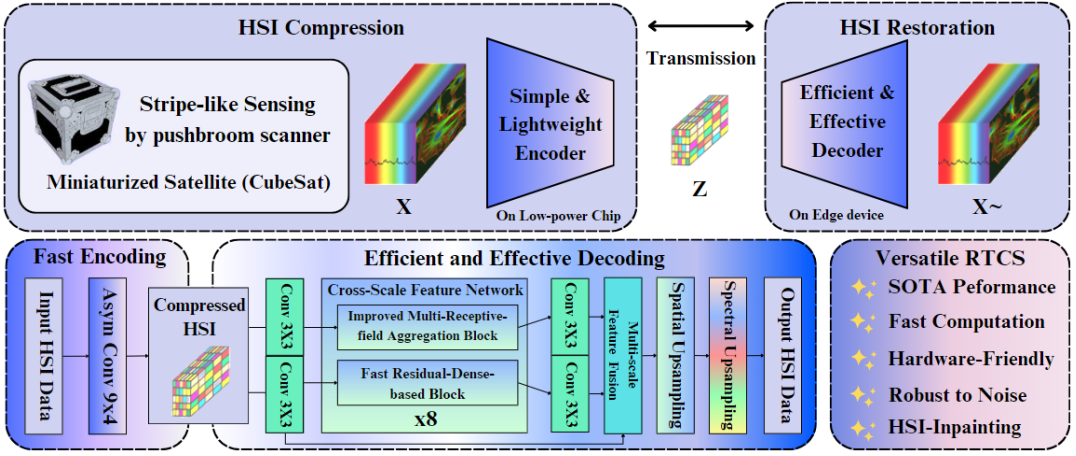
Efficient Computing Systems rethink computation at every level of abstraction: prefix-scan reformulations of exact attention (ELSA), bitstream-level forensics that skip pixel decoding entirely, adaptive quantization that preserves accuracy at ultra-low bit widths (QuantTune/FracQuant), and joint transmission-restoration for bandwidth-constrained satellites — cutting latency, memory, and energy cost for sustainable, real-time deployment.
Autonomous Visual Perception extends vision from 2D images into 3D physical space: material-aware scene reconstruction with hyperspectral unmixing, BEV adversarial defense for self-driving (BFDM), physics-aligned shadow and reflection removal that feeds robust features to downstream robotic pipelines (PhaSR, ReflexSplit), and uncertainty-aware 3D annotation for autonomous driving datasets.
Broad-Spectrum Scientific Sensing pushes perception beyond the visible: universal hyperspectral restoration via vision-language prompts (PromptHSI), real-time CubeSat compressed sensing recognized with the Future Technology Award, hyperspectral pansharpening through sparse spectral representations (S3RNet), and cross-spectral forgery detection that reveals manipulation invisible to RGB analysis.
These pillars do not operate in isolation. Hyperspectral forensics merges trust with spectral sensing. On-satellite real-time inference merges efficiency with broad-spectrum data. BEV adversarial defense merges trust with embodied perception. This cross-pillar synergy is not accidental — it reflects a single underlying conviction: deployment-grade visual intelligence must be simultaneously trustworthy, efficient, embodied, and perceptually complete.
Adjacent computational direction. Beyond the four visual pillars, we also explore lean computational systems for emerging workloads such as resource-aware quantum simulation. This is an extension of the lab's deployment-oriented systems perspective, not a fifth visual pillar.
Research viewAll cards remain visible; the selected option changes priority/order only. Within each priority group, cards remain newest first.
Main ResearchCompetition & WorkshopEfficient Computing Systems
Research Pillars
- Autonomous Visual Perception: PhaSR, ReflexSplit, autonomous driving, tracking, embodied perception, 3D reconstruction
- Assured Visual Intelligence: GRACEv2, UMCL, DDD-Net, DeepFake detection, proactive authentication, trustworthy media analysis
- Broad-Spectrum Scientific Sensing: PromptHSI, S3RNet, CubeSat compressed sensing, remote sensing, satellite imaging
- Efficient Computing Systems: ELSA, QuantTune, FracQuant, bitstream-level inference, CubeSat on-board processing, edge deployment
A short introduction to my research: [PDF] (Latest updated: Oct. 2024)
Main Research
Visual Restoration & Reconstruction
Robust Shadow Removal
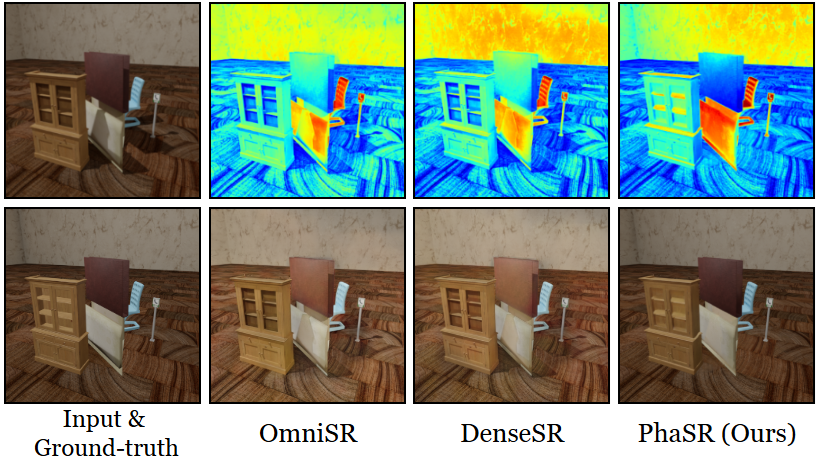
PhaSR: Generalized Image Shadow Removal with Physically Aligned Priors
Accepted to IEEE/CVF Conference on Computer Vision and Pattern Recognition (CVPR) 2026.
Shadow removal under complex and multi-source lighting is hindered by the mismatch between physical illumination priors and learned features. PhaSR couples physically aligned normalization with geometry-semantic rectification to deliver robust shadow removal that generalizes beyond traditional single-light settings.
Research Direction. Autonomous Visual Perception / Robust Scene Recovery
Main Research
Visual Restoration & Reconstruction
Reflection Separation in the Wild
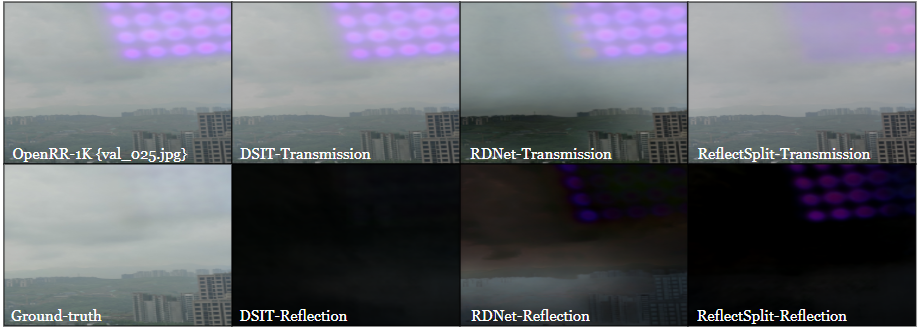
ReflexSplit: Single Image Reflection Separation via Layer Fusion-Separation
Accepted to IEEE/CVF Conference on Computer Vision and Pattern Recognition (CVPR) 2026.
Reflections on glass introduce nonlinear layer mixing that often breaks existing separation networks. ReflexSplit uses dual-stream fusion-separation blocks and curriculum training to achieve robust performance on both synthetic and real-world benchmarks.
Research Direction. Autonomous Visual Perception / Robust Scene Recovery
Efficient Computing Systems
Efficient AI
Efficient AI Inference
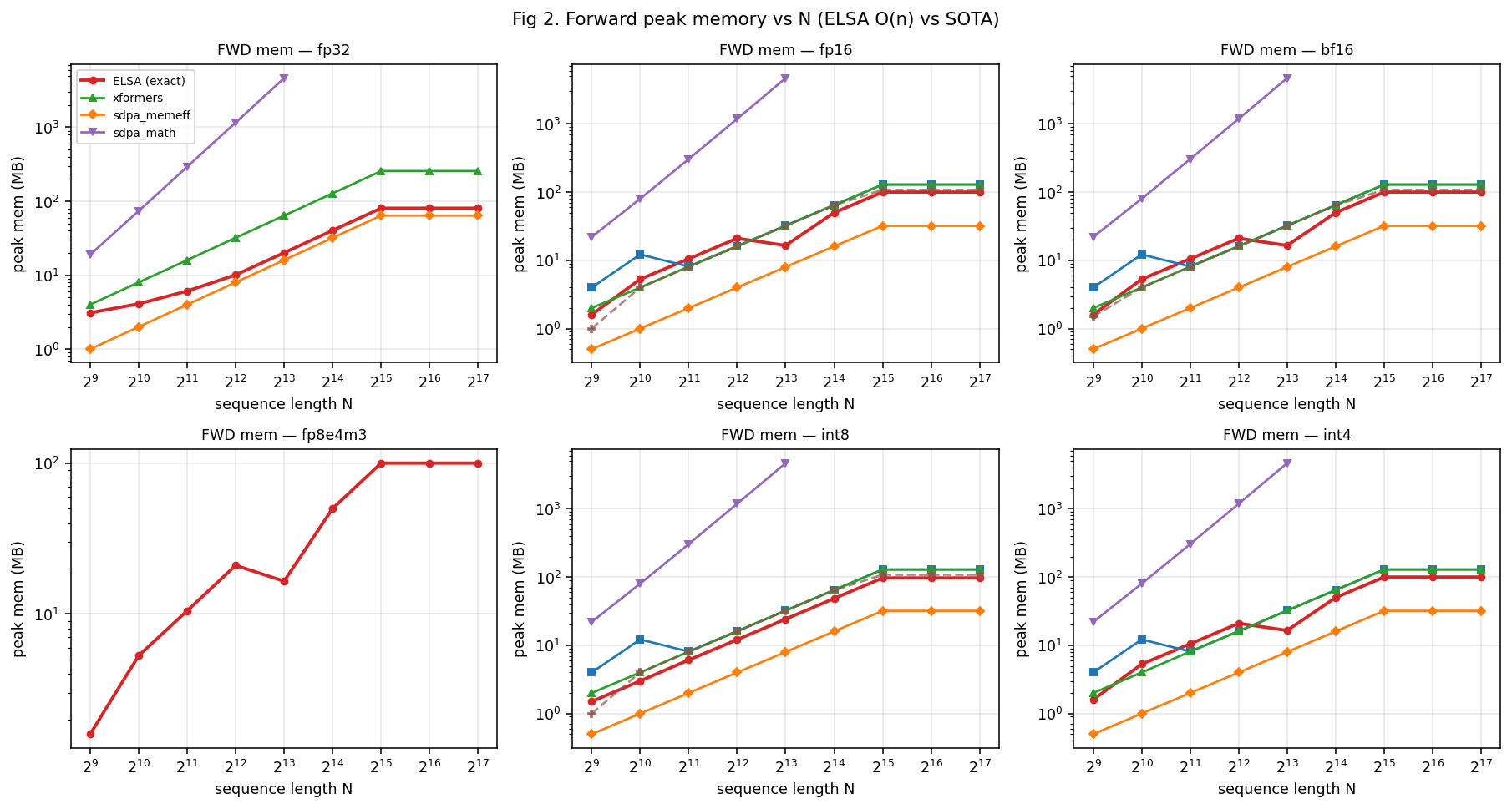
ELSA: Exact Linear-Scan Attention for Fast and Memory-Light Vision Transformers
Accepted to CVPR 2026 Findings (CVPRF).
ELSA reformulates exact softmax attention as a prefix scan over an associative monoid, achieving memory-light inference with provable FP32 stability and no retraining. Implemented in Triton and CUDA C++, it improves deployability on both data-center and edge hardware.
Research Direction. Efficient Computing Systems / Hardware-Agnostic Inference
Efficient Computing Systems
Quantum Simulation
Memory-Bounded Quantum Simulation
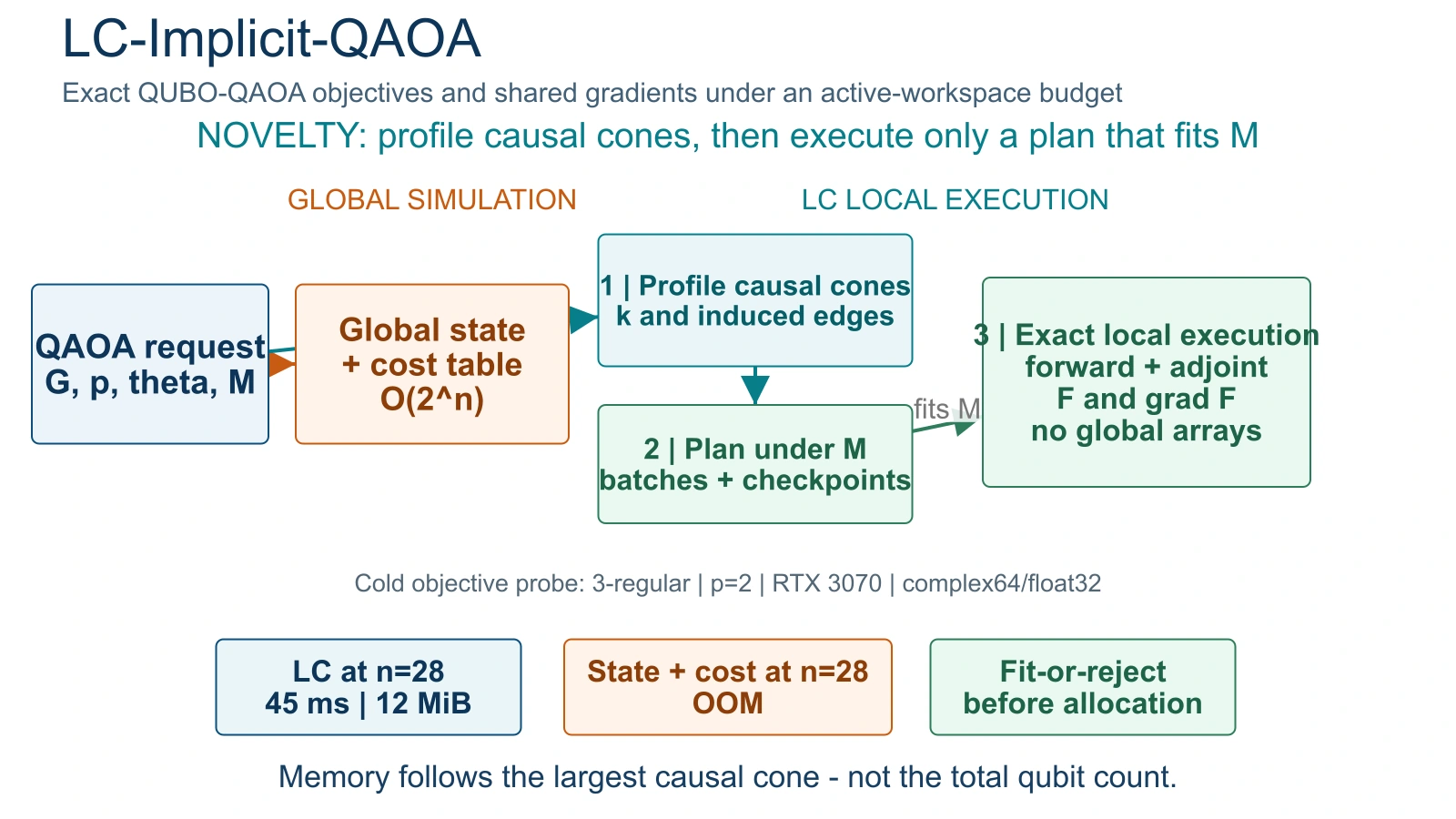
LC-Implicit-QAOA: Active-Workspace-Capped Exact Objective-and-Gradient Evaluation for Training over Bounded QUBO Light Cones
Preprint on arXiv.
LC-Implicit-QAOA evaluates exact QUBO-QAOA objectives and shared-parameter gradients directly from bounded causal cones, materializing neither a global state vector nor a global cost table, so cost follows the largest neighbourhood instead of the qubit count. It profiles the problem and commits to a declared workspace budget before allocation; on the reported 3-regular benchmarks it reaches n=28 in 45 ms using 12 MB, while a matched state-plus-cost simulator runs out of memory, with reported comparisons of 28× faster than NVIDIA CUDA-Q at n=28 and 31× faster than CUAOA at n=26.
Research Direction. Efficient Computing Systems / Resource-Aware Quantum Simulation
Efficient Computing Systems
Quantum Simulation
Per-Instance Selection for Quantum Simulation
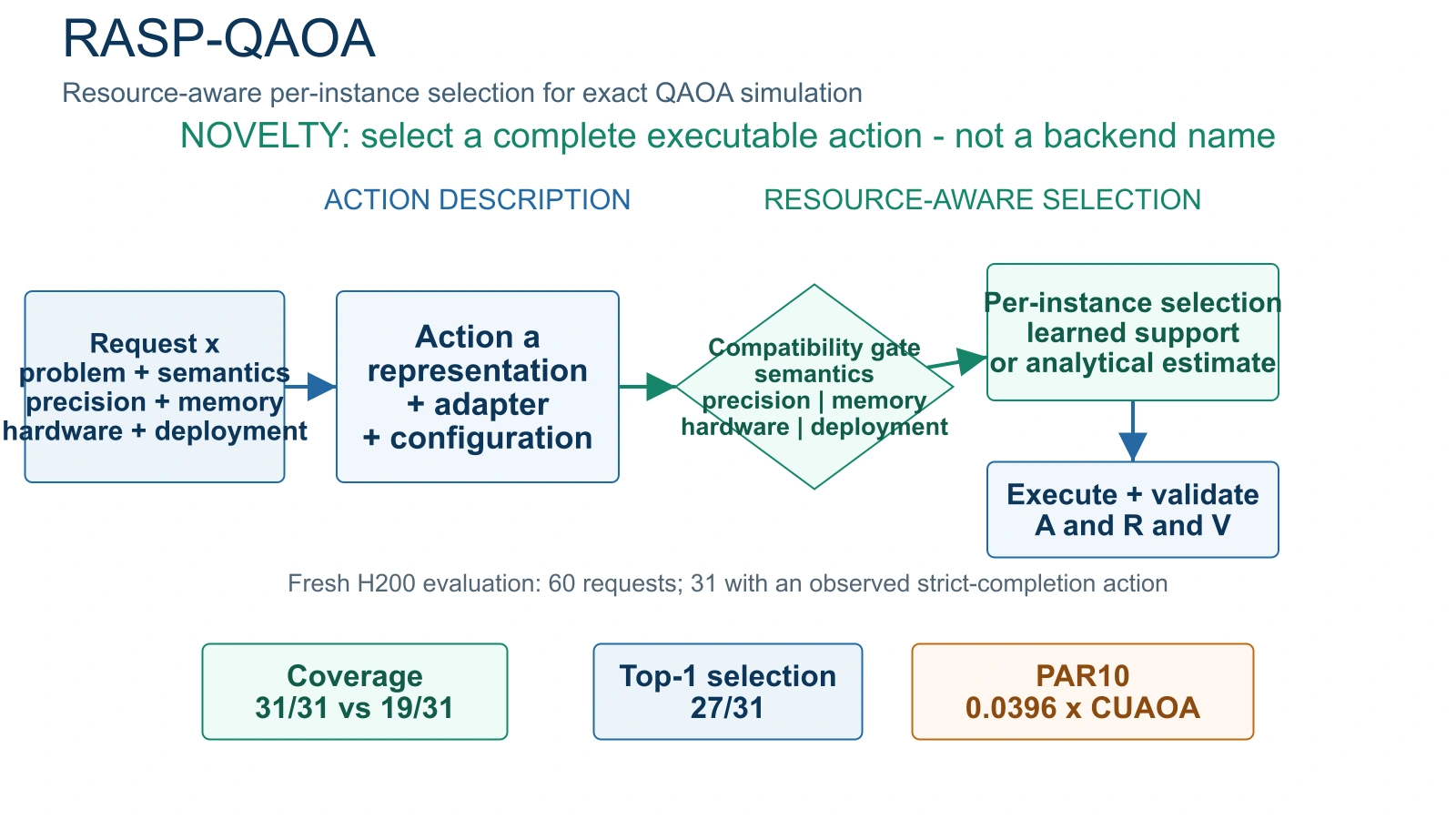
RASP-QAOA: Resource-Aware Per-Instance Selection for Exact QAOA Simulation
Preprint on arXiv.
RASP-QAOA treats simulator selection as a complete executable action—representation, adapter, precision mode and memory policy fixed together—and removes every action that cannot implement the requested semantics or fit the memory budget before ranking what remains. In a content-disjoint 60-request H200 evaluation it succeeds on all 31 requests with an admissible action, compared with 19 for a fixed best-known backend, and reports a 25× lower failure-penalized PAR10 score; a depth-1 stump matches gradient boosting, indicating that the gain comes from describing the options rather than from model capacity.
Research Direction. Efficient Computing Systems / Resource-Aware Quantum Simulation

Efficient Computing Systems
Efficient AI
Candidate-Aware Early Exit for Diffusion Language Models
Where and When to Commit: Candidate-Aware Decoding for Diffusion Language Models
Preprint on arXiv.
LATCH separates when to stop an entire diffusion-language-model generation from where to accelerate block commitments. Confidence-Verified Commit (CVC) checks confidence and sustained stability over the dynamically extracted candidate span, while Block-Wise Early Commit (BWEC) accelerates only non-final blocks. Across 11 tasks and 22 evaluation settings on LLaDA and Dream, accuracy stays within 2.0 percentage points of full decoding, with 9.3–17.8× end-to-end TPS speedups on short-answer tasks and 2.0–3.3× on long-reasoning tasks.
Research Direction. Efficient Computing Systems / Efficient AI
Competition & Workshop
Visual Restoration & Reconstruction
Illumination-Invariant Semantic Priors
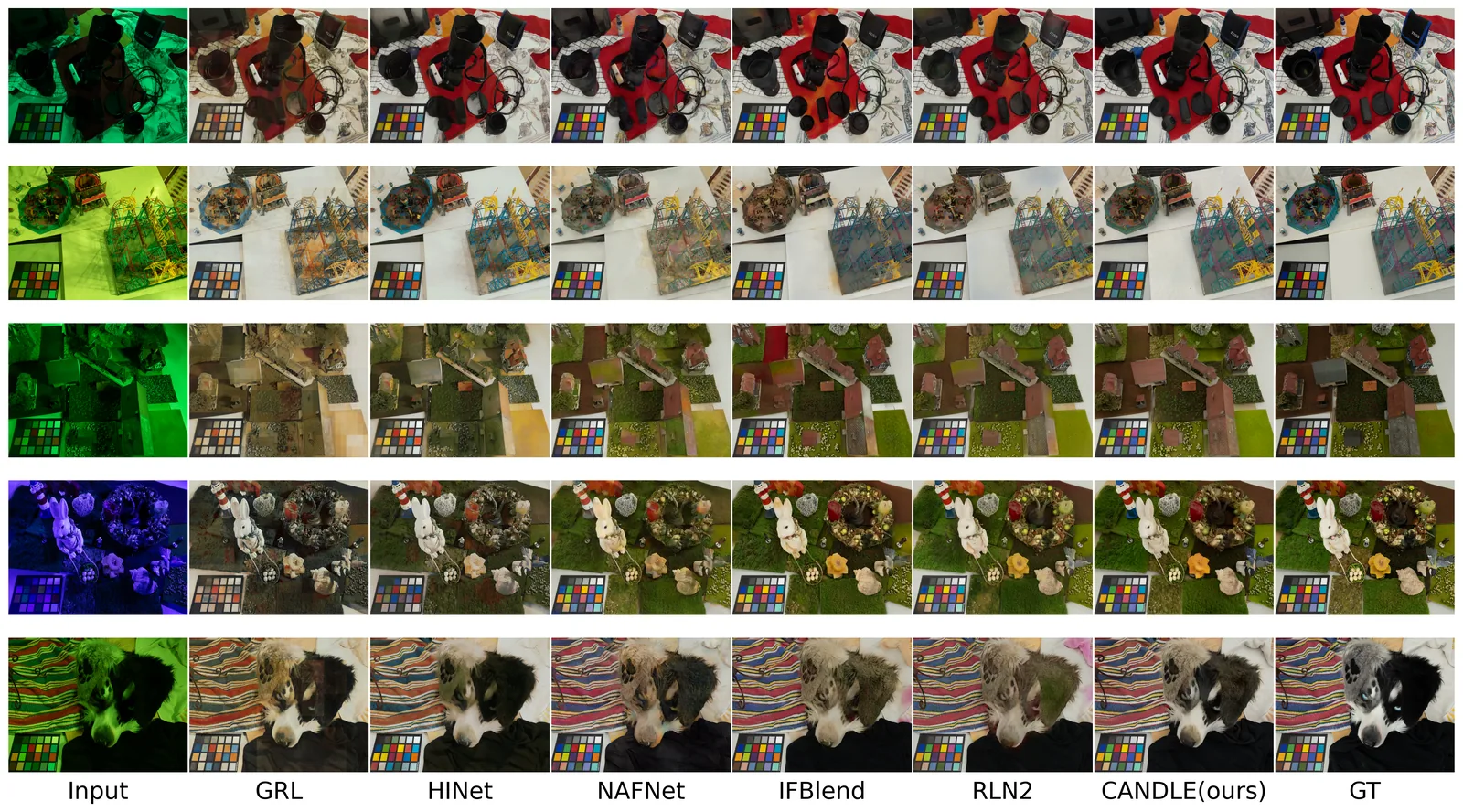
CANDLE: Illumination-Invariant Semantic Priors for Color Ambient Lighting Normalization
Published in IEEE/CVF Conference on Computer Vision and Pattern Recognition Workshops (CVPRW) 2026.
CANDLE uses semantic priors to normalize color ambient lighting while preserving scene structure. The paper reports a 1.22 dB PSNR improvement and 3rd place in the NTIRE 2026 ALN Color Lighting track plus 2nd place in the White Lighting fidelity track.
Research Direction. Autonomous Visual Perception / Robust Illumination Normalization
[CVF Open Access] [arXiv] [GitHub]

Competition & Workshop
Medical & Biomedical Vision
Rare-Pathology Video Capsule Endoscopy
VISTA: Validation-Guided Integration of Spatial and Temporal Foundation Models with Anatomical Decoding for Rare-Pathology VCE Event Detection
Post-competition preprint on arXiv.
VISTA combines EndoFM-LV and DINOv3 with validation-guided fusion and anatomy-aware temporal decoding for event-level rare-pathology detection in video capsule endoscopy. The authors report hidden-test mAP@0.5 of 0.3530 and mAP@0.95 of 0.3235; post-competition global threshold refinement reaches 0.3726 and 0.3431, respectively, and is reported as second place for Team ACVLab.
Research Direction. Broad-Spectrum Scientific Sensing / Medical Video Intelligence
Efficient Computing Systems
Efficient AI
Quantization-Friendly Deployment
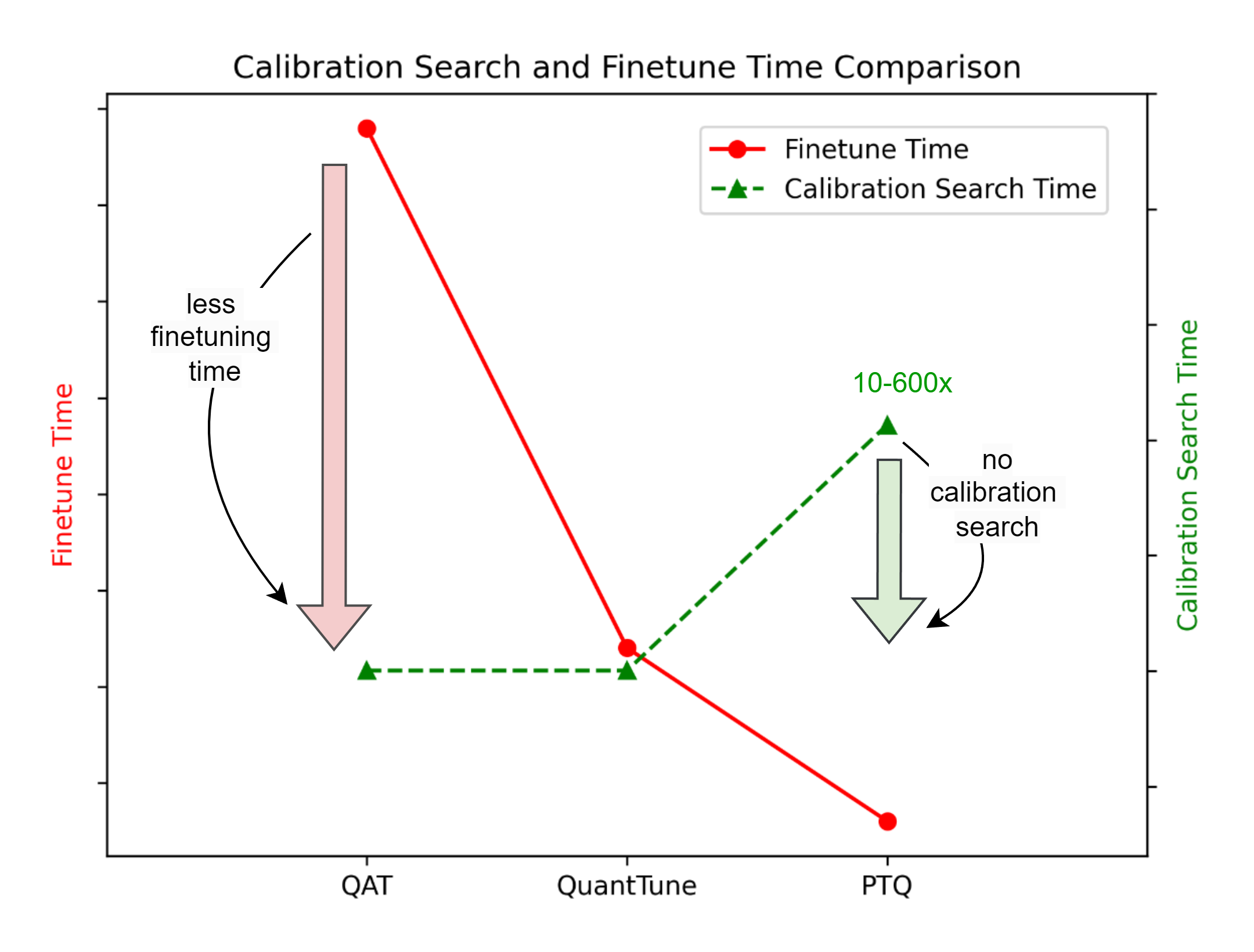
QuantTune: Optimizing Model Quantization with Adaptive Outlier-Driven Fine Tuning
Published in IEEE International Conference on Multimedia Information Processing and Retrieval (MIPR) 2025.
QuantTune addresses outlier-driven dynamic range amplification during Transformer quantization and substantially reduces accuracy loss under low-bit settings. The method requires no extra inference-time hardware complexity and transfers across ViT, BERT, and OPT models.
Research Direction. Efficient Computing Systems / Quantization-Aware Deployment
[arXiv] [IEEE Xplore]
Main Research
Hyperspectral & Scientific Sensing
Universal Hyperspectral Restoration
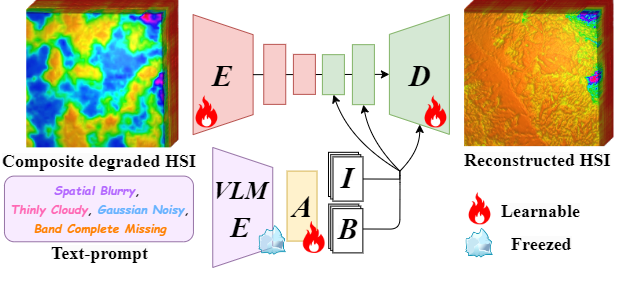
PromptHSI: Universal Hyperspectral Image Restoration with Vision-Language Modulated Frequency Adaptation
Published in IEEE Transactions on Geoscience and Remote Sensing (TGRS), Early Access, Feb. 2026.
PromptHSI is a universal all-in-one framework for hyperspectral restoration that combines frequency-aware modulation with vision-language guided prompt learning. A single model can handle cloud occlusion, blur, noise, and spectral band loss across remote sensing scenarios.
Research Direction. Broad-Spectrum Scientific Sensing / Hyperspectral Restoration
[IEEE Xplore] [arXiv] [GitHub]
Main Research
Trustworthy Media & DeepFake
Media Security & DeepFake Robustness
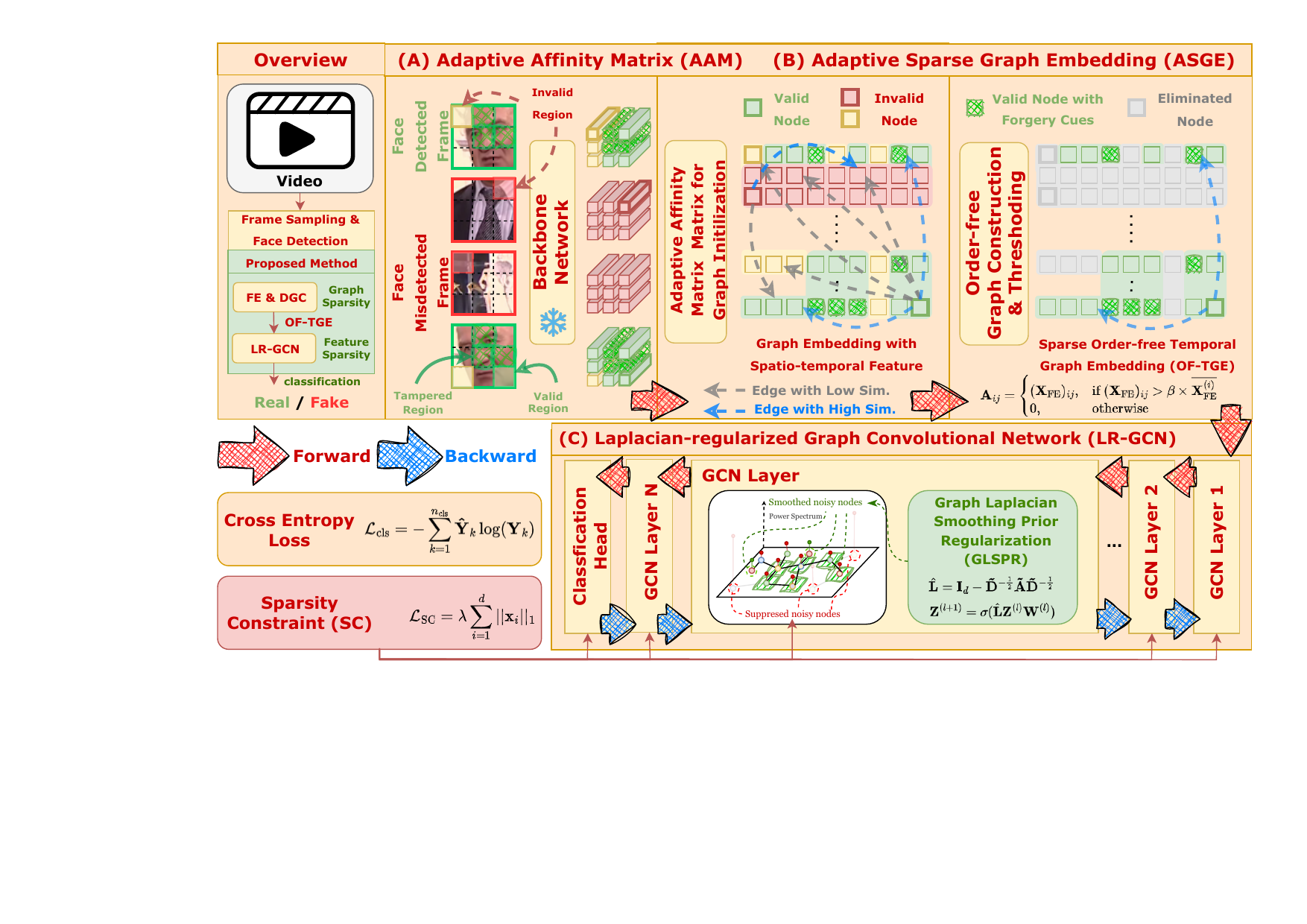
Towards Robust DeepFake Detection under Unstable Face Sequences: Adaptive Sparse Graph Embedding with Order-Free Representation and Explicit Laplacian Spectral Prior
Submitted to IEEE Transactions on Information Forensics and Security (TIFS).
GRACEv2 targets unstable face sequences caused by compression, occlusion, and shuffled or missing frames. By combining order-free temporal graph embedding with an explicit Laplacian spectral prior, it improves robust DeepFake detection under severe real-world disruptions.
Research Direction. Assured Visual Intelligence / Robust DeepFake Detection
[arXiv]
Main Research
Trustworthy Media & DeepFake
Cross-Compression DeepFake Detection
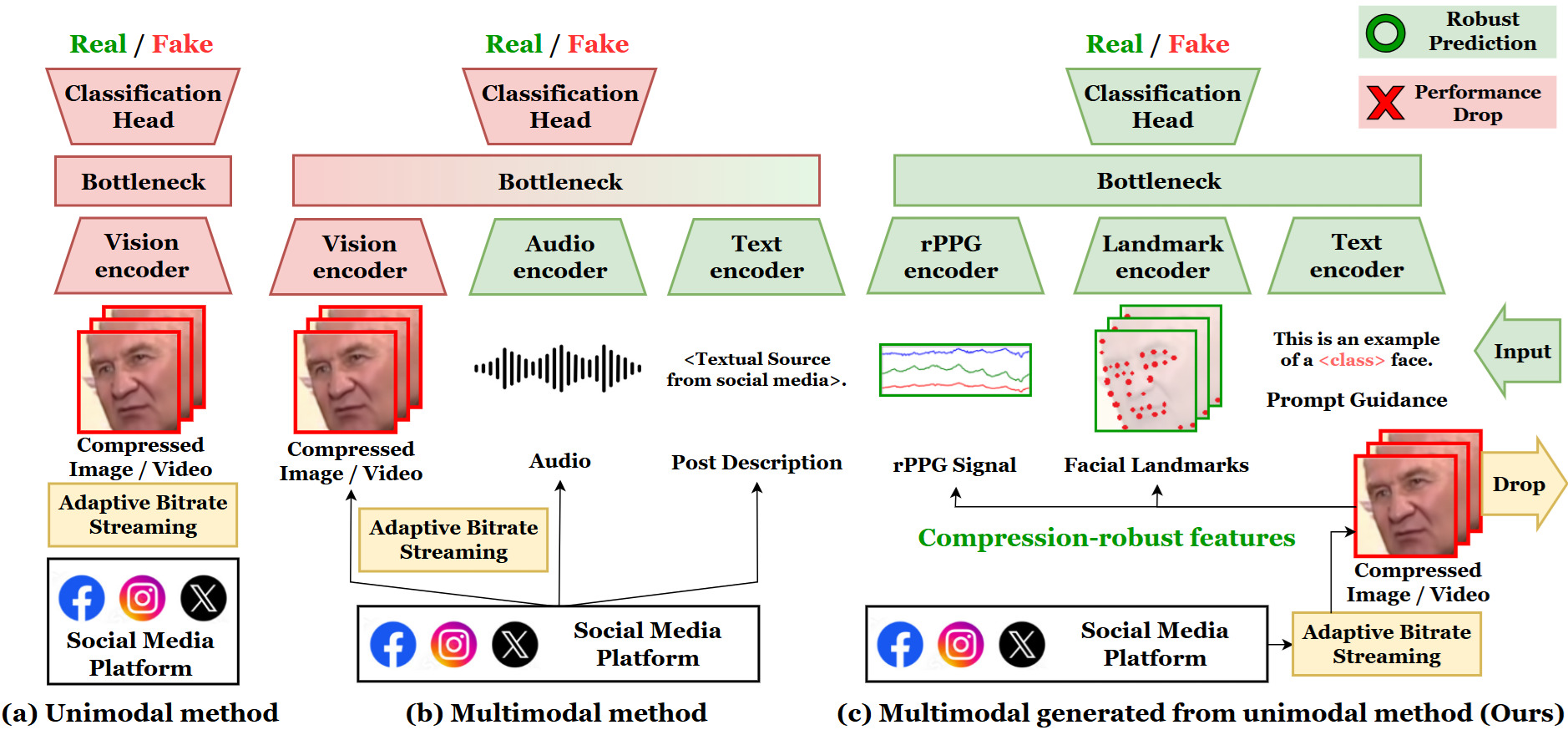
UMCL: Unimodal-Generated Multimodal Contrastive Learning for Cross-compression-rate Deepfake Detection
Published in International Journal of Computer Vision (IJCV), Jan. 2026.
UMCL synthesizes compression-robust multimodal cues, including rPPG, temporal landmarks, and semantic embeddings, from a single visual input. The framework improves cross-compression DeepFake detection while preserving interpretable feature relationships.
Research Direction. Assured Visual Intelligence / Cross-Compression Forensics
Efficient Computing Systems
Visual Restoration & Reconstruction
New SOTA SR Model
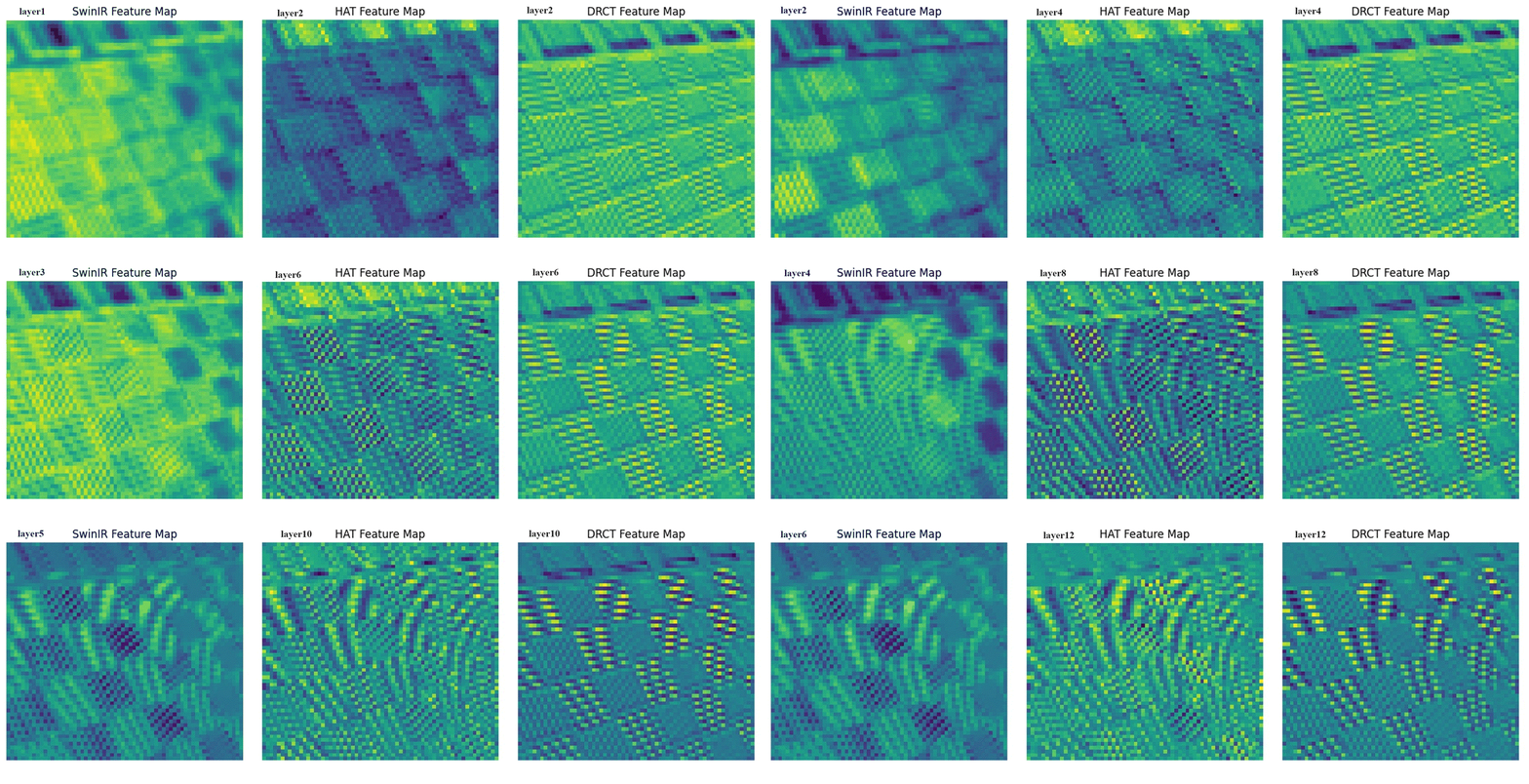
DRCT: Saving Image Super-Resolution away from Information Bottleneck
Presented at IEEE/CVF Conference on Computer Vision and Pattern Recognition (CVPR) 2024, NTIRE Workshop [Oral].
Chih-Chung Hsu, Chia-Ming Lee, Yi-Shiuan Chou
Research Direction. Efficient Computing Systems / Efficient Super-Resolution
Competition & Workshop
Medical & Biomedical Vision
Semi-Supervised Learning in CT Scan Detection
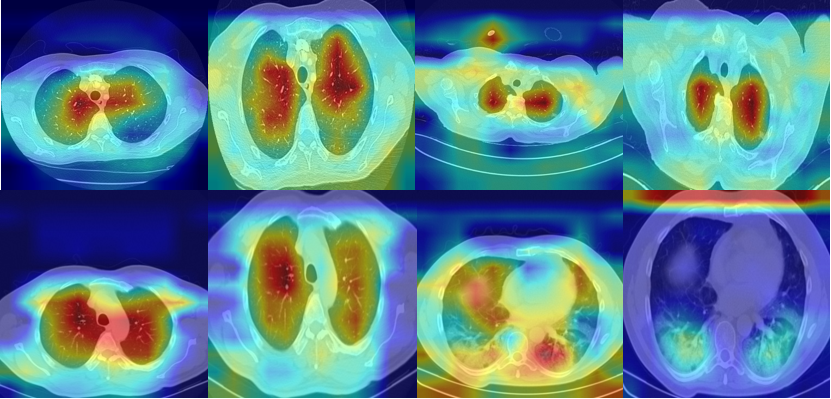
A Closer Look at Spatial-Slice Features for COVID-19 Detection
Presented at IEEE/CVF Conference on Computer Vision and Pattern Recognition (CVPR) 2024, DEF-AI-MIA Workshop.
Chih-Chung Hsu, Chia-Ming Lee, Yang Fan Chiang, Yi-Shiuan Chou, Chih-Yu Jiang, Shen-Chieh Tai, Chi-Han Tsai
Research Direction. Assured Visual Intelligence / Medical Imaging
[PDF] [arXiv] [GitHub] [Project Page]
Main Research
Hyperspectral & Scientific Sensing
Ultra Fast Hyperspectral Image Compressive Sensing
Real-Time Compressed Sensing for Joint Hyperspectral Image Transmission and Restoration for CubeSat
Published in IEEE Transactions on Geoscience and Remote Sensing (TGRS).
Future Tech Award (未來科技獎)
Chih-Chung Hsu, Chih-Yu Jian, Eng-Shen Tu, Chia-Ming Lee, Guan-Lin Chen
Research Direction. Broad-Spectrum Scientific Sensing × Efficient Computing Systems
[IEEE Xplore] [GitHub]

Competition & Workshop
Medical & Biomedical Vision
COVID-19 Symptoms Detection in CT Scan
Selected challenge papers and results
IEEE ECCV Workshop 2022 [1st place in COV19D challenge]
IEEE ICCV Workshop 2021 [3rd place in COV19D challenge]
Our models are designed for noisy, in-the-wild CT scans and remain robust across varying spatial and slice resolutions.

Main Research
Social & Multimodal Prediction
Social Media Prediction as Longitudinal Task (2022-)
A Comprehensive Study of Spatiotemporal Feature Learning for Social Media Popularity Prediction
Published in ACM Multimedia 2022.
C.C. Hsu, P.J. Tsai, T.C. Yeh, and X.U. Hou
We reformulate social media popularity prediction as an identity-preserving longitudinal task and study how multimodal temporal features improve prediction reliability over time.
[PDF]

Competition & Workshop
Autonomous Perception & Tracking
Semantic Segmentation for Autonomous Driving (2021-)
Selected papers for robust and efficient scene understanding
IEEE ICME Workshop 2022
Augmented-Training-Aware Bisenet for Real-Time Semantic Segmentation [PDF]
IEEE ICASSP 2022
DCSN: Deformable Convolutional Semantic Segmentation Neural Network for Non-Rigid Scenes [PDF]
These projects focus on stable, real-time semantic understanding for autonomous driving, balancing robustness and low-compute deployment.

Main Research
Trustworthy Media & DeepFake
Fake Image/Video (DeepFake) Detection (2018-)
Selected papers and outreach
IEEE ICIP 2019 and Applied Sciences
Detecting Generated Image Based on Coupled Network with Two-Step Pairwise Learning
IEEE IS3C 2018
Learning to Detect Fake Face Images in the Wild
[Project] [PDF] [GitHub] [Online Demo]
偽造 / 造假照片偵測,聚焦於可信媒體分析與打擊假照片、假新聞。
Main Research
Hyperspectral & Scientific Sensing
Deep Compressed Sensing for Hyperspectral Images (2020-)
Selected papers for efficient satellite sensing
IEEE Transactions on Geoscience and Remote Sensing
DCSN: Deep Compressed Sensing Network for Efficient Hyperspectral Data Transmission of Miniaturized Satellite [PDF]
CVGIP 2020
Deep Joint Compression and Super-Resolution Low-Rank Network for Fast Hyperspectral Data Transmission
以深度學習為基礎之高光譜 / 多光譜影像超解析度與壓縮感知技術開發。

Main Research
Autonomous Perception & Tracking
Decision-Making of Autonomous Vehicles Using Vision Information (2019-)
Selected work on robust visual decision-making
Multimedia Tools and Applications
Deep Learning-based Vehicle Trajectory Prediction based on Generative Adversarial Network for Autonomous Driving Applications
IEEE ICCE-TW 2020
Learning to Predict Risky Driving Behaviors for Autonomous Driving
[Large-Scale Vehicle Collision Dataset @ TW] [Link]
自駕車視覺系統之危險駕駛行為預測與台灣道路地區資料庫建置。

Main Research
Social & Multimodal Prediction
Social Media Prediction (2016-)
Selected outputs and awards
- ACM Multimedia 2017-2020
- Social Media Prediction Based on Residual Learning and Random Forest (2017). See the publication list for newer versions.
- 2 Best-Performance Awards and 2 Top-Performance Awards
- Best Grand Challenge Paper Award (2017)
- [GitHub] [PDF]
預測社群貼文點擊率與長期流行度變化。



Efficient Computing Systems
Visual Restoration & Reconstruction
Image Deblocking and Super-Resolution (2013-2014)
Learning-Based Joint Super-Resolution and Deblocking for a Highly Compressed Image
Published in TMM 2015 and presented at MMSP 2013.
MMSP 2013 Top 10% Paper Award
[Project Page] [PDF] [Matlab Source Code (32-bit only)]
同時去除區塊效應並提高解析度,讓放大後的影像維持清晰。

Efficient Computing Systems
Visual Restoration & Reconstruction
Super-Resolution of Textured Video (2012-2014)
Temporally Coherent Super-Resolution of Textured Video via Dynamic Texture Synthesis
Published in IEEE Transactions on Image Processing (TIP) and presented at MMSP 2014.
[Project Page] [PDF] [Matlab Code]
提供動態紋理視訊的超解析度技術,改善放大後的細節與時間一致性。

Main Research
Visual Restoration & Reconstruction
Quality Assessment for Image Retargeting (2011-2013)
Objective Quality Assessment for Image Retargeting Based on Perceptual Geometric Distortion and Information Loss
Published in IEEE Journal of Selected Topics in Signal Processing and presented at VCIP 2013.
[Project Page] [PDF] [Matlab Code]
評估影像濃縮技術的品質,量化幾何失真與資訊流失。

Efficient Computing Systems
Visual Restoration & Reconstruction
Super-Resolution (2010-2011)
Image Super-Resolution via Feature-Based Affine Transform
Presented at MMSP 2011.
[Project Page] [PDF] [Executable Code (Matlab)]
Note. We provide an implementation of NLM with the proposed method as an example.
影像超解析度技術依賴於資料庫,我們提出一種方法豐富資料庫的類型,提高放大的效果。

Main Research
Visual Restoration & Reconstruction
Face Hallucination (2008-2010)
Face Hallucination Using Bayesian Global Estimation and Local Basis Selection
Presented at MMSP 2010.
[Project Page] [PDF] [Matlab Code & Database]
人臉超解析度放大,從極低解析度人臉影像重建出較清晰的人臉結果。

Main Research
Trustworthy Media & DeepFake
Video Forensics (2007-2008)
Video Forgery Detection Using the Correlation of Noise Residue
Presented at MMSP 2008.
Citations > 100
[PDF] [Matlab Code] [Database]
視訊鑑識技術,聚焦於影片偽造偵測與可信媒體分析。

Main Research
Trustworthy Media & DeepFake
Image Authentication (2006-2007)
Image Authentication and Tampering Localization Based on Watermark Embedding in the Wavelet Domain
Published in Optical Engineering.
[PDF] [Source Code]
將浮水印藏入影像中,並可耐受不同攻擊以進行影像認證與竄改定位。